Introduction
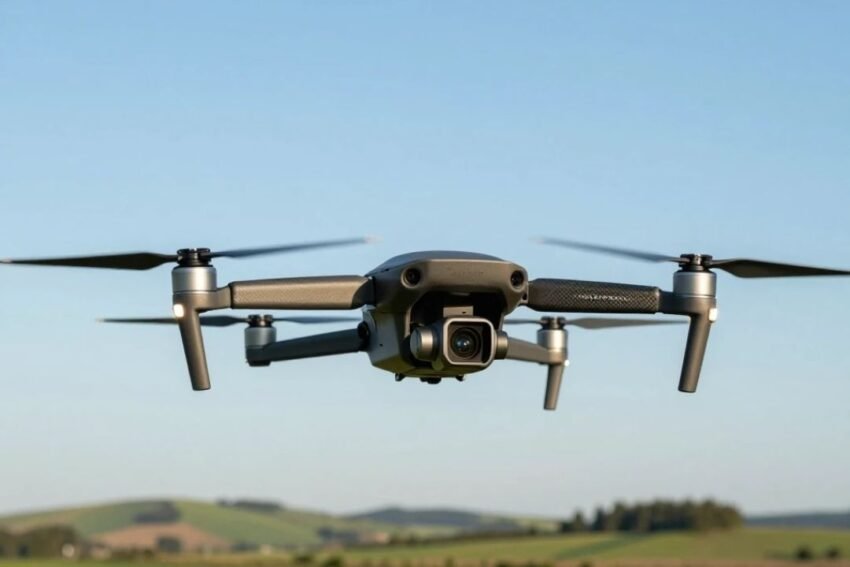
Drones in 2026 are becoming smarter, more autonomous, and more useful across a growing range of industries. Advances in artificial intelligence, computer vision, sensors, batteries, connectivity, and flight-control systems are transforming drones from remotely controlled aircraft into sophisticated technology platforms.
Today, drones are used for photography, filmmaking, agriculture, surveying, mapping, construction, infrastructure inspection, emergency response, environmental monitoring, logistics, and many other applications. Some modern drone systems can automatically follow routes, avoid obstacles, analyze images, and collect detailed information with limited human intervention.
The growth of AI-powered drones is particularly important. Artificial intelligence can help drones interpret visual information, identify objects, plan routes, and respond to changing environments. At the same time, improved cameras, thermal sensors, LiDAR, GPS, and onboard computing are expanding what drones can accomplish.
This article explores the latest drone technology in 2026, including autonomous drones, AI-powered flight systems, drone applications, benefits, challenges, regulations, emerging innovations, and the future of unmanned aerial technology.
What Is a Drone?
A drone is an unmanned aircraft system that can be remotely controlled or operate autonomously.
Most consumer drones use multiple rotors to generate lift and control movement. Larger unmanned aircraft can use different configurations depending on their purpose.
A drone can include:
- Flight controllers
- Motors
- Propellers
- Cameras
- GPS
- Sensors
- Batteries
- Communication systems
- Onboard computers
- AI software
The combination of hardware and software allows drones to fly, collect data, and perform specialized tasks.
Why Drones Are Important in 2026
Several technological developments are driving drone innovation.
Artificial Intelligence
AI helps drones process sensor information and perform increasingly autonomous tasks.
Better Cameras
High-resolution cameras provide detailed images and video.
Advanced Sensors
LiDAR, thermal cameras, radar, and obstacle-detection sensors expand drone capabilities.
Improved Battery Technology
Longer operating times can increase the usefulness of electric drones.
Faster Computing
Powerful processors allow more analysis to happen directly onboard the aircraft.
Better Connectivity
Modern wireless networks can support communication between drones, operators, and cloud systems.
1. AI-Powered Drones
One of the biggest drone trends in 2026 is the integration of artificial intelligence.
Traditional drones generally depend heavily on human operators.
AI-powered drones can automate parts of flight and data processing.
AI can help with:
- Object recognition
- Obstacle detection
- Navigation
- Route planning
- Image analysis
- Tracking
- Landing assistance
This can make drones more useful in complex environments.
2. Autonomous Drone Flight
Autonomous flight technology is becoming increasingly sophisticated.
A drone can use sensors, maps, GPS, and onboard software to determine where it is and where it needs to go.
Autonomous features may include:
- Automatic takeoff
- Route following
- Obstacle avoidance
- Automated landing
- Return-to-home functions
- Mission planning
Autonomy can reduce operator workload, although appropriate human supervision remains important.
3. Obstacle Avoidance
Modern drones increasingly use multiple sensors to identify obstacles.
These may include:
- Cameras
- Infrared sensors
- LiDAR
- Radar
- Proximity sensors
Obstacle avoidance can help drones navigate around trees, buildings, poles, and other objects.
The effectiveness of obstacle detection depends on the environment, lighting, weather, sensor capabilities, and software.
4. Computer Vision
Computer vision allows drones to process visual information.
AI-powered vision systems can potentially identify:
- Buildings
- Roads
- Vehicles
- Crops
- People
- Infrastructure
- Environmental changes
This makes drones useful for inspection, mapping, agriculture, security, and research.
5. Drone Photography
Photography remains one of the most popular drone applications.
Modern camera drones can capture aerial perspectives that would otherwise require aircraft or expensive equipment.
Drones are commonly used for:
- Travel photography
- Real estate
- Landscapes
- Events
- Marketing
- Film production
Camera quality continues to improve as manufacturers introduce better sensors, stabilization, and image-processing systems.
6. Drone Videography
Drones have transformed aerial filmmaking.
Professional video drones can provide stabilized footage from different heights and angles.
They are useful for:
- Movies
- Documentaries
- Sports
- Tourism
- Advertising
- Real estate
Automated flight modes can help capture consistent movements while reducing the workload for operators.
7. Drones in Agriculture
Agriculture is one of the most important commercial drone applications.
Farmers can use drones to monitor large fields quickly.
Drones can capture information about:
- Crop health
- Irrigation
- Plant growth
- Pest damage
- Field conditions
AI-powered image analysis can help identify differences across fields.
8. Precision Agriculture
Drones can support precision agriculture by providing detailed aerial information.
Instead of treating an entire field identically, farmers can use collected data to identify areas that may require additional attention.
Potential benefits include:
- More efficient field monitoring
- Faster problem detection
- Better resource management
- Reduced manual inspection
The usefulness of drone data depends on accurate analysis and appropriate farming decisions.
9. Drone Mapping
Drones are increasingly used for aerial mapping.
A drone can capture many overlapping images, which software can combine into detailed maps or three-dimensional models.
Applications include:
- Construction
- Surveying
- Mining
- Agriculture
- Land management
- Infrastructure planning
Drone mapping can cover large areas efficiently.
10. LiDAR Drones
LiDAR-equipped drones use laser pulses to measure distances.
This technology can create detailed information about terrain and structures.
LiDAR drones can support:
- Topographic mapping
- Forest analysis
- Construction surveys
- Infrastructure inspection
- Environmental research
LiDAR can be particularly useful where detailed three-dimensional information is required.
11. Drones in Construction
Construction companies can use drones to monitor projects.
Drone flights can provide aerial views of construction sites and help teams track progress.
Potential applications include:
- Site mapping
- Progress monitoring
- Surveying
- Stockpile measurement
- Inspection
Regular aerial data can help project managers understand how a site is changing over time.
12. Infrastructure Inspection
Drones can inspect difficult-to-access infrastructure.
Examples include:
- Bridges
- Towers
- Roofs
- Solar panels
- Industrial facilities
- Pipelines
Using drones can reduce the need for workers to physically access some difficult locations.
However, drone inspections should still follow appropriate safety procedures.
13. Drones for Emergency Response
Drones can provide rapid aerial information during emergencies.
They may support:
- Disaster assessment
- Search operations
- Flood monitoring
- Wildfire observation
- Emergency mapping
Thermal cameras can be useful in certain search-and-rescue environments.
Drones can provide information to response teams without requiring personnel to immediately enter potentially hazardous areas.
14. Drones for Environmental Monitoring
Drones are increasingly useful for environmental research.
They can monitor:
- Forests
- Wetlands
- Coastal areas
- Wildlife habitats
- Agricultural ecosystems
Aerial imagery allows researchers to study areas that can be difficult to inspect from the ground.
15. Wildlife Research
Drones can provide researchers with aerial information about wildlife and habitats.
They may be used to:
- Count animals
- Monitor habitats
- Observe migration
- Study environmental changes
Responsible operation is essential because drones can disturb wildlife if used improperly.
16. Drone Delivery
Drone delivery continues to be explored for specialized logistics applications.
Potential deliveries include:
- Medical supplies
- Small packages
- Food
- Emergency equipment
Drones can be useful where speed or difficult terrain creates challenges for traditional transportation.
However, large-scale drone delivery depends on aviation regulations, safety systems, infrastructure, weather, and business economics.
17. Medical Drone Delivery
Healthcare logistics is one area where drones may provide significant value.
Drones can potentially transport certain medical supplies between facilities or to difficult-to-reach locations.
Possible applications include:
- Medical equipment
- Laboratory samples
- Emergency supplies
- Temperature-sensitive materials
Such operations require appropriate regulatory and safety procedures.
18. Drones and 5G Connectivity
Advanced wireless connectivity can support drone operations.
Fast networks can allow drones to communicate with:
- Operators
- Control centers
- Cloud platforms
- Other systems
However, autonomous drones should not depend entirely on network connectivity.
They should have appropriate onboard systems for handling communication interruptions safely.
19. Edge Computing in Drones
Edge computing allows drones to process information locally.
Instead of sending every camera frame to a remote server, onboard processors can analyze some information directly.
Potential benefits include:
- Faster response
- Lower latency
- Reduced network usage
- Greater operational independence
This is particularly useful for autonomous applications.
20. Thermal Imaging Drones
Thermal cameras detect infrared radiation and can reveal temperature differences.
Thermal drones can be useful for:
- Infrastructure inspection
- Fire monitoring
- Search and rescue
- Industrial inspections
- Solar panel analysis
Thermal imaging provides information that ordinary cameras cannot capture.
21. Drone Swarms
Drone swarms involve multiple drones coordinating their actions.
Instead of relying on one aircraft, a group of drones can potentially work together.
Possible civilian applications include:
- Environmental monitoring
- Agricultural surveying
- Large-area mapping
- Search operations
- Infrastructure inspection
Coordinating multiple autonomous aircraft presents significant technical and regulatory challenges.
22. Drone-in-a-Box Systems
Drone-in-a-box systems combine drones with automated docking stations.
A drone can potentially:
- Leave the station
- Perform a scheduled mission
- Collect data
- Return
- Recharge or undergo maintenance
These systems can support recurring inspection and monitoring tasks.
23. Security and Privacy
Drone technology creates important privacy considerations.
Camera-equipped drones can collect large amounts of visual information.
Responsible operators should consider:
- Privacy
- Data protection
- Secure storage
- Access controls
- Local regulations
Organizations should have clear policies for how drone-collected information is handled.
24. Drone Cybersecurity
Connected drones can face cybersecurity risks.
Potential threats include:
- Unauthorized access
- Communication interception
- Software vulnerabilities
- Data theft
- GPS-related interference
Security should therefore be included in drone design and operations.
Strong authentication, secure software, protected communications, and regular updates can help reduce risks.
25. Improved Drone Batteries
Battery performance is one of the major limitations for many electric drones.
Researchers and manufacturers continue exploring improvements in:
- Battery chemistry
- Energy density
- Charging
- Thermal management
Longer flight times could expand commercial drone applications.
However, battery performance depends on drone size, payload, weather, flight conditions, and operating requirements.
26. Hydrogen and Alternative Power Systems
Some larger drone platforms are exploring alternative power systems.
Potential advantages can include longer endurance for certain applications.
However, alternative power technologies can introduce additional complexity involving:
- Weight
- Safety
- Infrastructure
- Cost
- Maintenance
Electric batteries remain important for many smaller drone applications.
27. Digital Twins for Drone Operations
Digital twins can create digital representations of physical environments or assets.
Drone-collected information can help update these models.
Digital twins may support:
- Infrastructure monitoring
- Construction planning
- Asset management
- Environmental analysis
Combining drones with digital twins can create more detailed views of physical environments.
28. Drones and Smart Cities
Smart cities may use drones for specialized applications such as:
- Infrastructure inspection
- Environmental monitoring
- Emergency response
- Mapping
Drone technology can complement ground-based sensors and other smart-city systems.
29. Future of Autonomous Drones
Future drones are likely to become more autonomous.
Possible improvements include:
- Better obstacle avoidance
- Smarter navigation
- Improved computer vision
- Longer flight times
- Better AI
- More reliable communication
The goal is to make drones capable of performing useful missions while maintaining strong safety controls.
30. Future of Drone Technology
The future of drone technology will likely involve deeper integration with:
AI + Robotics + Edge Computing + Sensors + Cloud Platforms + Advanced Connectivity
Drones may increasingly become autonomous data-collection platforms rather than simply flying cameras.
They could inspect infrastructure, monitor crops, map environments, support emergencies, and perform specialized logistics tasks.
Benefits of Drones
Drones provide several important advantages.
Faster Data Collection
Drones can quickly collect aerial information.
Improved Accessibility
They can reach certain locations that are difficult to access from the ground.
Cost Efficiency
For some applications, drones can reduce the need for traditional aerial inspection methods.
Increased Safety
Drones can perform certain inspections without requiring workers to physically enter difficult locations.
High-Quality Data
Modern cameras and sensors can provide detailed information.
Automation
Autonomous flight can reduce operator workload.
Challenges of Drone Technology
Drones also face important challenges.
Regulations
Drone operations must comply with applicable aviation and local rules.
Privacy
Camera-equipped drones can raise privacy concerns.
Safety
Drones must avoid people, buildings, aircraft, and other hazards.
Battery Life
Limited energy can restrict flight time.
Weather
Wind, rain, heat, and cold can affect drone performance.
Cybersecurity
Connected drones can face digital security threats.
Reliability
Autonomous systems must operate safely in changing environments.
Skills for Drone Technology Careers
People interested in drone technology can develop skills in:
- Drone operation
- Programming
- Artificial intelligence
- Computer vision
- Electronics
- Robotics
- GIS
- Mapping
- Data analysis
- Aviation technology
Drone professionals may work in agriculture, surveying, photography, construction, inspection, logistics, research, or emergency services.
Frequently Asked Questions
What are drones used for in 2026?
Drones are used for photography, mapping, surveying, agriculture, construction, inspection, environmental monitoring, emergency response, research, and specialized delivery.
How is AI changing drones?
AI can improve navigation, object recognition, obstacle avoidance, route planning, image analysis, and autonomous operation.
What is an autonomous drone?
An autonomous drone can perform certain flight or mission tasks using onboard software, sensors, navigation systems, and automated decision-making.
Can drones deliver packages?
Drone delivery is being developed and used for selected applications, but large-scale deployment depends on regulations, safety, infrastructure, weather, and economic factors.
How long can a drone fly?
Flight time varies significantly depending on the drone, battery, payload, weather, and flight conditions.
Are drones safe?
Drones can be operated safely when appropriate equipment, training, procedures, regulations, and risk controls are followed.
Conclusion
The drone technology industry in 2026 is evolving rapidly as artificial intelligence, computer vision, advanced sensors, edge computing, improved batteries, and modern connectivity become increasingly integrated into unmanned aircraft.
Drones are no longer simply tools for capturing aerial photographs. They are becoming sophisticated platforms for collecting data, monitoring environments, inspecting infrastructure, supporting agriculture, mapping land, assisting emergency services, and performing specialized logistics operations.
AI is one of the most important technologies driving this transformation. AI-powered drones can analyze visual information, detect obstacles, plan routes, recognize objects, and support increasingly autonomous flight.
Agriculture is benefiting from drone-based crop monitoring and precision farming. Construction companies can use drones for site mapping and progress tracking. Infrastructure operators can inspect difficult-to-access structures without relying entirely on traditional inspection methods.
Drones also have important applications in emergency response. They can provide aerial information during floods, fires, disasters, and search operations while potentially reducing exposure to dangerous environments.
New technologies such as LiDAR, thermal imaging, edge AI, digital twins, automated docking stations, and drone swarms are further expanding what unmanned aircraft can do.
However, the industry still faces significant challenges. Battery limitations, weather conditions, cybersecurity, privacy, safety, regulations, and reliability must all be addressed before drones can operate more widely and autonomously.
The future of drones will likely involve closer integration with robotics, AI, cloud computing, sensors, and advanced wireless networks.
As autonomous capabilities improve, drones may increasingly perform scheduled missions with limited human intervention. They could inspect infrastructure, monitor agricultural fields, collect environmental data, support emergency teams, and perform specialized deliveries.
For businesses, engineers, developers, and technology enthusiasts, understanding drone technology trends in 2026 provides valuable insight into one of the fastest-evolving areas of modern technology.
Ultimately, the future of drones is about more than flying aircraft. It is about creating intelligent, autonomous, connected machines that can collect information, navigate safely, and solve real-world problems from the air.
With responsible development and appropriate regulation, drones can become an increasingly valuable part of modern transportation, agriculture, infrastructure, emergency response, research, and automation.